

WHAT BUSINESS OWNERS AND IT LEADERS NEED TO KNOW
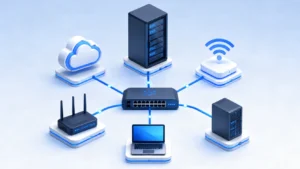
The network is no longer just a collection of devices
Network management is changing quickly. For years, IT teams have managed infrastructure through separate dashboards. Typically one for switches, another for wireless, another for firewalls, another for cloud, another for users, another for monitoring, and another for tickets.
That model worked when networks were smaller, when threats moved slower, and systems were less connected. In this new tech landscape, it is no longer enough.
Modern businesses now depend on cloud applications, hybrid users, smart devices, branch networks, remote access, collaboration platforms, security tools, and data center systems that all affect one another.
For Ugandan and regional businesses, the local impact is obvious. A slow network can delay payments, interrupt front-desk service, affect CCTV and access-control monitoring, stop staff from reaching cloud tools, and make customer support look unreliable. In clinics, schools, hospitality, NGOs and branch-based SMEs, “small network issues” often translate to lost revenue, poor service, compliance exposure, and reputational damage.
Our take-away from Cisco Cloud Control is not that every organisation must buy a new enterprise platform right away. The lesson is that businesses should start building the foundations for unified operations now. Accurate inventory, documented networks, segmented systems, monitored links, secure remote access, and clear escalation workflows.
Does it matter right now?
Who must pay attention?
- Businesses with multiple branches, cloud applications, remote users, or hybrid infrastructure.
- Organizations using mixed networking, security, collaboration, CCTV, access control, and cloud systems.
- IT teams that still troubleshoot by jumping between many dashboards and manual notes.
- Leadership teams that need better uptime, security visibility, and faster incident response.
Signals that your network management needs to evolve
What You Should Do Next
Use this checklist to prepare your network for unified, AI-assisted operations without losing control.
Instructions
Step 1: Build a complete network inventory
Document sites, switches, routers, firewalls, access points, servers, cloud systems, users, critical applications, and dependencies.
Step 2: Review segmentation, access, and security posture
Check VLANs, firewall rules, VPN access, admin accounts, MFA, exposed services, firmware status, and high-risk assets.

Step 3: Centralize monitoring and incident context
Put reliable monitoring, alerting, logs, backup checks, and escalation procedures in place so issues can be diagnosed faster.

Step 4: Adopt automation with guardrails
Start with safe, human-approved workflows. AI-assisted operations should improve decisions, not create uncontrolled infrastructure changes.

Step 5: Request an MCRS network assessment
MCRS can inspect your current setup, identify operational blind spots, and recommend practical improvements for reliability, security, and growth.

The practical takeaway
The network is no longer managed as a collection of devices. It is managed as a live business platform.
Cisco Cloud Control is important because it gives shape to the future: unified operations, AI-assisted investigation, secure automation, and human-governed execution.
For businesses that depend on reliable connectivity, secure systems, and uninterrupted operations, the message is clear: network management is evolving from manual monitoring to intelligent, unified operations. The time to prepare is now.

